

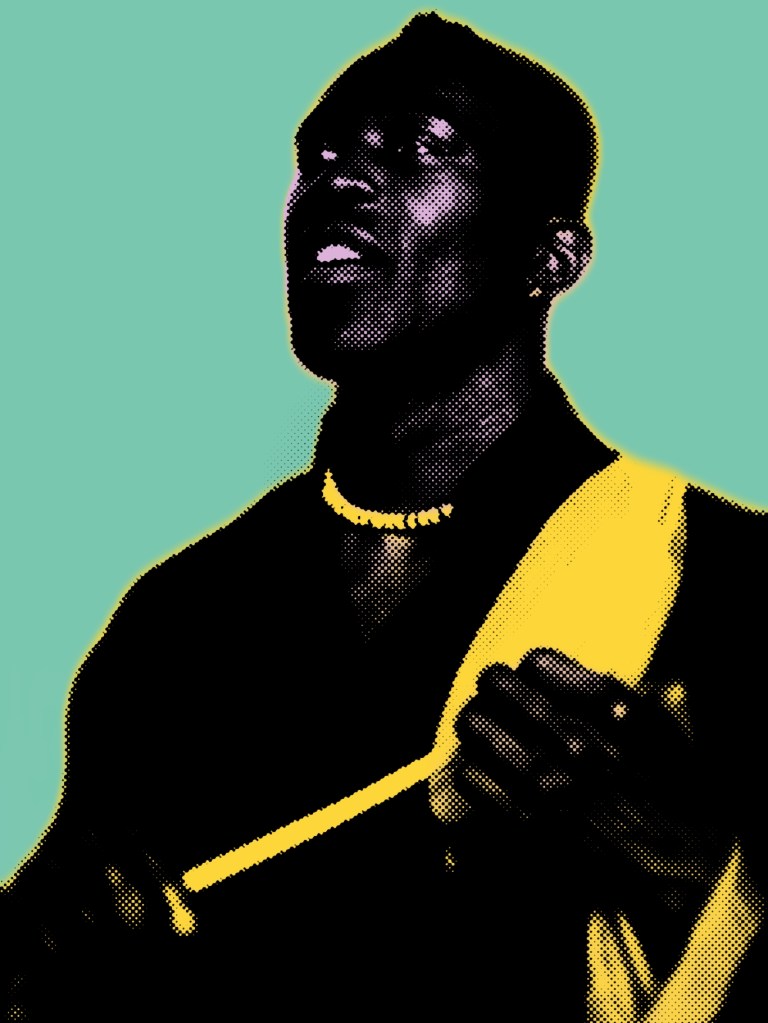
Sola’s upcoming album, How Should I, is a soulful journey through time and space, weaving Yoruba traditions with the ever-evolving trends of the UK music scene. It is a deeply personal exploration, one that feels as if it’s been marinating in the essence of his Nigerian roots while also soaking up the electric vibe of London’s streets. In this chat, Sola peels back the layers of his creative process, sharing how his dual heritage has shaped his music.

Sola, your new album ‘How Should I’ seems like such a personal project. When you were putting it all together, were there any moments in the studio that really surprised you or made you step back and think, “Wow, this is something special”?
How Should I, the title track produced a moment of surprise and a feeling of, ‘we are doing something interesting’. This track feels to me like an opening in the album.
Your music beautifully blends Yoruba culture with the sounds and influences of the UK. That’s such a unique mix! How do you go about finding that balance between your roots and your experiences growing up in London? Is it something that comes naturally?
I think it is a need to constantly challenge the cultural ideas I find myself embodying and representing. As a British Nigerian there is a fluidity to my sense of being in the world, that I find challenging and interesting. Touring and travelling around the world add another dimension to this experience.
The title track “How Should I” originally came from your work with the Royal Shakespeare Company. How did you go about adapting it for this album?
It was straight forward because I wanted to arrange the piece for a band to perform behind Sheila. Sheila brilliantly brought a powerful and perceptive performance to the song, that really tapped into a sense of how Ophelia was dealing with her struggles.
“Touch My Soul” feels like such a powerful and vibrant track. What was the inspiration behind that one? Did it start out as something different before evolving into what it is now, or did you always know what you wanted it to be?
With so many of the songs, this one started with a need to sonically explore a feeling or idea about a question.
You’ve had the chance to perform with some absolute legends like Stevie Wonder, The Rolling Stones, and David Bowie. Are there any particular moments from those performances that you still carry with you?
Stevie Wonder and the late David Bowie reminded me of how long it takes to craft good work and how the great artists speak through the generations probably because of their commitment to authenticity, excellence and desire to engage and ask the difficult questions.
As someone who’s always exploring new sounds and ideas, is there a genre or style of music you haven’t yet experimented with but would love to dive into?
I would like to experiment with electronic sounds, maybe collaborate with an artist who is deeply immersed in that mode of creative expression.
The music video for “Olukumi” was filmed at Abbey Road Studios, which is such an iconic place! How did it feel to bring that song to life in such a legendary setting? Did being there add any extra pressure, or did it just fuel your creativity even more?
Yes, Abbey Road is such a culturally important space, with so much history, I was excited to try and feel part of that, especially with the style of music we were bringing. Today, so many great artists, young and old are working there, trying to bring their sound to life. You feel something when you’re there.
You’re involved in so many creative projects, from scoring TV shows like Bob Hearts Abishola to writing music for theatre productions. How does working on a personal album like this compare to those other projects? Do you approach them differently, or do they all feed into each other in some way?
They feed into each other, in different ways. The album is personal, and I have been able to take more time to craft what I am trying to say. The experience of working in the different musical fields, allow me to draw on many perspectives and sound palettes. The disciplines are slightly different, but in many cases, they help one to be much clearer about what one is trying to say, for example short pieces for scene transitions in a television show or theatre production. These moments are not about me, but how I enable the dynamic/ moment of the music to compliment the scene changes.
You’ve had such an incredible journey in the music world. What advice would you give to young artists who are just starting out and looking to find their own voice?
Maintain an open state of mind and explore as many different creative perspectives as you can. Keep working on your craft as a musician and make time to study, stay on the learning curve all the time. Learning is for life and growth. Keeping a state of enquiry in all things is good for the soul in my humble opinion.
For those who are just discovering your music through this album, what would you like them to know about you as an artist and what drives your creativity?
That I am curious, fearless and willing to learn from others.





 SoundVille ~ Music reviews, Interviews and Podcast .V.