

When someone mentions reimagining a classic like Clair de Lune, you might wonder, “Why mess with something so perfect?” But then along comes someone like Morten Vamplew—aka Mortenissimo—and suddenly, it all clicks. He doesn’t just reinterpret Debussy; he stretches it, bends it, and somehow keeps the heart of the piece intact. His latest single Clair de Lune [extended] feels more like a conversation between Debussy and today’s creativity. Morten wants you to lose yourself in the music, hearing the echoes of the past while vibing with something refreshingly new. Ready to get all the details? Read the interview below!
Your new compositions are inspired by Debussy’s work. How do you think Debussy himself would react to your extended versions of his pieces?
If Debussy were to hear my project today, I would hope that he’d recognise my deep respect for his style as a composer. I would also want Debussy to know that my goal was never to make improvements to his works, but rather to expand on and further explore the elements and ideas that I find so beautiful in his original works.
I would also love it if Debussy, while listening to my extensions, were to recognise what specific elements I set out to expand on. If my musical intentions were to come across well to Debussy in a positive way, that would be a very rewarding outcome.
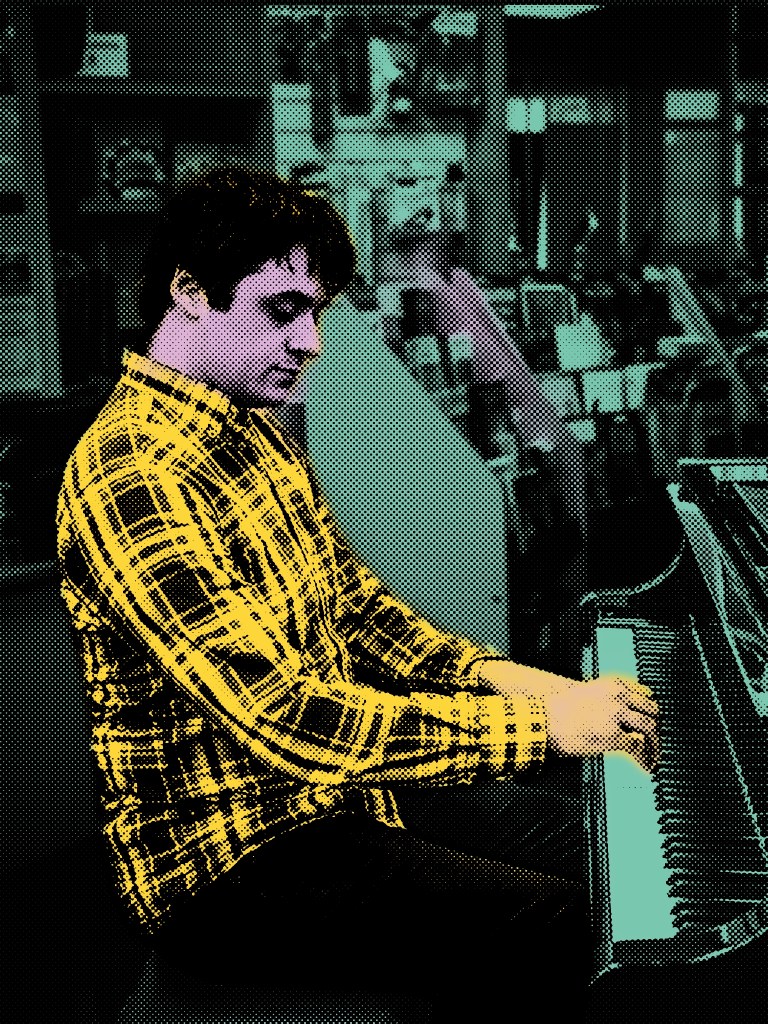
When did you first become fascinated with Debussy’s music? Was there a specific moment or piece that struck you?
When I was studying Grade 8 piano 10 years ago, Prelude from Suite Bergamasque was in the syllabus. This was my first encounter with Debussy’s music, but it wasn’t until 1 year later, when I heard Clair de Lune for the first time, that my love for the French composer’s music began.
I learnt Clair de Lune specifically for a wedding ceremony. After this, I went on to research and learn more of Debussy’s pieces from the same era, with a growing appreciation for his techniques and characteristics as a composer.
What stands out to me about Debussy’s music is its impressionistic and dreamlike qualities. I’m always drawn to the way the composer’s melodies and chords interact, as well as the intricacies of the harmonic layers throughout. The way Debussy constructs his harmonies often allows secondary melodies to emerge beneath the primary one, which adds a further level of depth to the piece that I can truly respect.
The feelings evoked by Debussy’s melodies and progressions are difficult to put into words. As a spiritual person, I love music that has the unique ability to transport me to another realm, where I can create my own imagery surrounding the music, and reflect on how it impacts my inner thoughts and emotions in that moment.
Expanding the works of a composer as iconic as Debussy takes a lot of courage, and I think we all have moments of doubt when tackling something so ambitious. How did you find the confidence to take this step, and what kind of doubts did you face along the way?
Debussy’s music has been very meaningful to me for nearly ten years, and his style has helped shape the way I improvise and come up with musical ideas. Because of this connection, I feel that Debussy’s works are the only ones I would generally have the confidence to expand on. I have a deep understanding of the French composer’s style and approach, a lot more so than with any other classical composer.
There were moments of uncertainty during the composition process. One of the main challenges was finding ways to incorporate specific ideas of my own seamlessly into Debussy’s original music. I wanted to ensure that the transitions from his work into mine, and then back again, felt natural, and that none of my extensions sounded out of place or disrupted the flow of the original piece.
*Your version of “Clair de Lune” includes new elements that you composed. Are there hidden references in these elements to other composers or musical styles that inspire you?
My main focus when writing the extensions was to stay true to Debussy’s style, but it would not surprise me if elements of my music also reflect the influence of other artists and composers that inspire me. Even if unintentional, these musical links may have naturally come through on a subconscious level during the composition process, without me fully realising at the time.
Over the years, I have been musically influenced by artist and songwriter Adam Young, who has numerous musical projects, some of which are heavy on the ethereal and dreamlike qualities that I love so much about Debussy’s music. I’m inspired by Adam’s melodies and chords, and the unique ways these elements communicate.
Franz Liszt is my second favourite classical composer. I really enjoy Liszt’s intriguing use of harmonies, dissonances and structures. Sometimes, when I’m composing a piece, I like to take the music in a slightly different direction, to add more variety to the listening experience. Liszt’s music has helped shape this approach of mine.
Have you ever considered incorporating elements not typical of classical music, such as electronic or ethnic motifs, into your work?
Yes, this is something I’ve considered. I’d love to create an electronic version of Clair de Lune, where I explore incorporating elements such as warm synth pads and peaceful bell sounds. I think these modern textures and effects could nicely complement the dreamlike atmosphere that Debussy’s work already portrays.
How do you approach integrating new elements into an existing structure of a piece? Is it challenging to maintain a balance between the original and the new parts?**
Finding the right balance between respecting Debussy’s original work and adding my own vision was a challenge at times. There were moments when it was notably harder to write a section that seamlessly extended the original material without straying too far from Debussy’s style. I wanted to ensure that the transitions between my extensions and Debussy’s original passages were smooth and cohesive.
It was also crucial for me that the soul of the music stayed true to Debussy’s vision throughout the entire piece, and that my contributions felt like a continuation rather than a departure from the respective piece.
What was your emotional state while creating the new sections for “Clair de Lune”?
When working on Clair de Lune [Extended], I was in a very reflective state of mind, similar to when I’m listening to or improvising in a style inspired by Debussy. His music generally puts me in a dreamlike mindset, where my emotions are difficult to put into words.
I felt especially relaxed throughout the creative process, and there were moments of great satisfaction and happiness when a new section came together and became an official part of the final product.
Was working on the “Debussy [extended]” album more of a creative challenge or a joy?
Working on Debussy [Extended] was primarily a great joy for me. I loved exploring the elements I love so much in Debussy’s music, and expanding on them in my own musical sections. The pieces I chose for the album are ones I’ve known for years now. The process felt more meaningful because of this.
There were a few challenges along the way, mostly related to the technical aspects of the creative process and the finalisation of certain musical ideas.
During the process of writing the extensions, there were a few sections that I needed to re-record several times, making changes to the music each time, until I reached a result I was happy with.
I have used Logic Pro for all of my composing and mixing thus far, and over the years, I have stumbled upon numerous challenges at various points of the music making process. These include technical absurdities with the sound during the mixing process and attempting to achieve the right level of loudness for streaming purposes.
With time, I have adapted to deal with these hurdles better, via continuous experience of working with Logic Pro, and further exploration of the compositional workflow and timeline that works best for me.
What advice would you give to young composers who want to bring something new to classical music but are afraid to deviate from the canon?
I would say that, in the modern world, it is important to respect the style and characteristics of classical music pieces and their composers. A combination of this aspect and musical innovation is a great way to keep classical music alive and relevant.
By exploring new interpretations or even reimagining existing works, musicians can introduce classical music to a wider audience and help to ensure its continued growth.
Innovation is great for building on the tradition of the music and finding new ways to connect with listeners.
If you had the opportunity to speak with Debussy personally, what would you like to ask him, or what advice would you seek?
I would love to ask Debussy about his workflow and methods of development to bring an initial idea to life and form a fully developed piece.
I would also be fascinated to learn about Debussy’s most significant musical inspirations, and ask how he found his unique identity as a composer.
Any help or advice on dealing with creative block would also be very helpful. I’d love to know Debussy’s course of action when stuck on a particular section of a composition.






 SoundVille ~ Music reviews, Interviews and Podcast .V.