

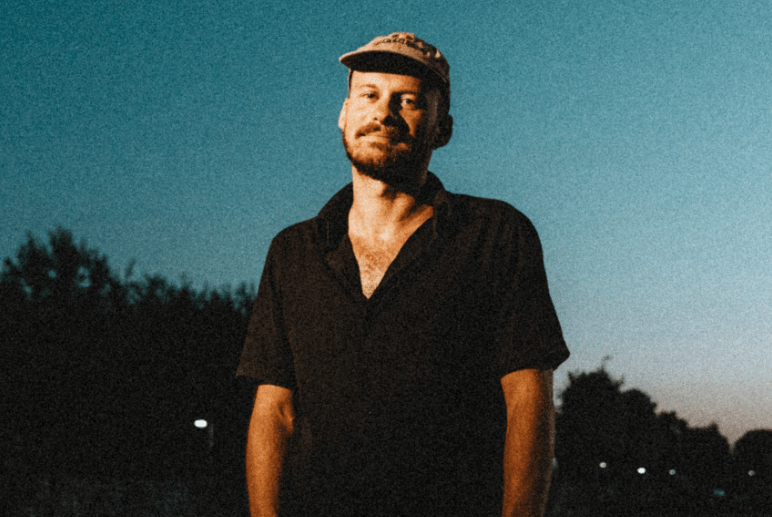
Diving into music means diving into stories, culture, and emotions that go way beyond the notes. Today, we’re chatting with someone from the legendary Diabaté griot family in Ziguinchor, a family with music in their blood. From the sun-soaked rhythms of Casamance to the snowy mountains of the Aran Valley, and from traditional koras and djembes to songs in multiple languages, this is a story about bridging worlds through sound. Get ready for a real journey that mixes heritage, identity, and the raw power of music coming to life.
I’m really fascinated by what it must have been like growing up in a Griot family in Ziguinchor. Can you paint me a picture of your childhood home? Were there always instruments around – koras, djembes, balafons just lying about? I imagine there were probably impromptu musical sessions happening regularly.
You know, in our family, when i wos little child, playing music had no time limit at home. We played music at all times of the day. My grandfather was a diabate and my grandmother a kouyate. That means that these two family names, diabate and kouyate, are the princely families of the dialytes. I was born into these families and I was rocked by the sounds when i wos born. My grandfather played the kora and sing, and my grandmother sing. My mother, she is a dialyte, but she was an intellectual. She studied and worked as a secretary in a company. When my grandfather and grandmother died, it was as if they brought the soul of improvisational music into the house, but there is always music at home and ceremonies organized at home. For me it is like a badge to carry this name, Diabates, and it is even a legacy to bring my personal touch to the landscape of African and universal music.

The move from Casamance to the Aran Valley in Spain is such an incredible geographical and cultural leap. What was going through your mind when you first arrived in Vielha? The landscape, the climate, the language – everything must have been so different from what you knew in Senegal. I’m really curious about those first few months. Were there moments of loneliness or culture shock?
Yes indeed, having been born in Casamance in southern Senegal and living in the Val d’Aran part of the year, it’s a big leap, to be honest, it’s like going from heat to cold, but it’s very enriching in terms of encounters and experiences.
You know, I’ve already traveled to other countries around the world before arriving in Vielha. The difference is that the Val d’Aran is the Pyrenees, the mountains, and I like being in contact with nature in Africa, In Casamance it’s the sun and the ocean almost all year round. The only thing these two geographical locations have in common: the Val d’Aran and Casamance, for me, is nature, and it’s very important for me to be in contact with nature.
Human beings are made to adapt to any change.
In Casamance, where I was born, there are people of different nationalities who live there all year round, and also Europeans because the climate is pleasant. 8 months out of 12 months of the year the weather is very nice, and we have 4 months during the year when it rains and the weather is not always good.
Your approach to language in music is really striking – French, Mandinka, Wolof, English, and Spanish all flowing through your songs. When you’re writing, do certain stories or emotions naturally want to come out in specific languages?
You know, throughout Africa, more than 2,500 different languages are spoken. Languages shouldn’t be a barrier, especially in music. It’s the captivating emotions we should feel when listening to music, even if we don’t understand the language. for my case it is a little different, because I have messages to pass for this reason I learned at school these 3 languages which were within my reach, French English and Spanish to be able to share my sensitivity and my vision of the world, for a better world of peace and love without weapons and without war, but as we are human races and we populate this earth, there will always be people who will decide to trace the future of the people without asking their opinion, all by disguising it with the slogan of democracy, by manufacturing missiles and bombs to embrace lives and attack the physical integrity and dignity of human been , all simply they have a different thought, it is sad but it is tyranny, and savage barbarism horner of beautiful slogan call power
When you’re collaborating with other musicians, especially those who might not understand this cultural context, how do you communicate what this means to you?
For me, it’s a moment of sharing with the musicians. You know, you have to be patient and pedagogical when you want to do things well. I’m aware that it’s a new style of music that I’m sharing with the musicians, a style of music they’ve never played before. Sometimes I work individually with each musician. This helps them grow, and they learn new things and techniques. They learn to play with the pulse without a metronome. In Africa, music is played without a metronome because rhythm is in our blood.
One day, my drummer told me, “I learned a lot when I started working with you. I enriched myself musically and technically.” Each musician tells me this in their own way. That’s what collaboration is all about. What I gain from,it is the different musical influences, that each musician brings to the collection so that our collection can reach different sensibilities.

Tell me about the magic that happens when you’re creating music with Toubamba. I can imagine there are moments in the studio where someone plays something that perfectly bridges your African musical heritage with Spanish sensibilities. What does that feel like when it happens?
Actually, I create the basis of the music, but I remain open to the sensibilities of others musicians, and I give the musicians the freedom to express themselves. After each rehearsal, I listen to the recordings. If there are parts that I need to readapt, I try to surpass myself by working on those parts. It also happens that sometimes the musicians enter other universes during rehearsals or concerts. I ask the musicians to enrich the parts. Sometimes a phrase that the musician has started is not finished, a Dorian mode that he has not finished developing.
The Diabaté name carries such incredible musical legacy – you mentioned Sékou Diabaté and this whole lineage of musical excellence. When you introduce yourself to other musicians, especially in the African music world, do people immediately have certain expectations about what you should sound like or how you should perform?
It’s true that the name Diabates is very heavy, because this surnames are part of the names of princely Dialy families. It’s also true that we inherited in our blood the way we feel music, even in the timbre of our voices, because being in contact with music from birth means we are connected with the spirit and soul of music in our blood. I remember in my collaborations with foreign musicians it happens to us that sometimes a new musician comes who wants to join the Toubamba music group as we live in a society where everyone is proud of himself, sometimes when we do rehearsals it happens that some things move in the sound in general, I tell the musicians, that there are some things that move in the sound in general, then I ask to cut the connection channels 1 by 1 and finally we find what was not framed in the beat, then everyone sits down on their chair to continue working
Starting your musical career at 14 is remarkable – that’s when most kids are just figuring out who they are. Can you take me back to that moment when you knew music wasn’t just something you enjoyed but actually your calling? And how did your family react when they realized this wasn’t just a phase but that you were seriously committed to making music your life? Were they supportive, worried, proud – probably all of the above?
Yes, as you so rightly pointed out, starting a musical career at 14 is normal for dialysis patients, but in my case, it was a little different because my mother was an intellectual. She had studied and worked as an executive secretary. She took me to school when I was 7, so she envisioned a future for me in government. I was very brilliant at school. She couldn’t bear the idea of following in the footsteps of my grandfather and grandmother, who were dialysis patients and always rocked us with music and singing in the house. And I think that deep down, my mother was right. She understood that the name dialysis patients bear is very heavy; you have to have certain special qualities. Today, my mother and I understand each other very well.

Your humanitarian work with “Window of Smile” really speaks to using music as a force for positive change. When you organize these intercultural music festivals, what kinds of transformations do you witness?
Music has always been a medium that transcends the soul into an immaterial world where everything becomes vibrations. The power to control the world is found in the immaterial world, which is detached from all our centers of enjoyment and our centers of interest. Combining music and giving the joy of living through our humanitarian organization, the Windows of SMILE, has followed the roadmap imposed by the universe to be in harmony with it.
Living in the Aran Valley after growing up in Casamance must create such interesting contrasts in your daily experience. Are there specific things you find yourself missing – maybe the sounds of your neighborhood in Ziguinchor, certain foods, or just the rhythm of daily life in Senegal?
When I’m in the Val d’Aran, what I miss is the sun, the smells, and the sound of the drums. These elements are part of me, and they also give me inspiration to create and compose songs. There are also things that I’m attached to now in the Val d’Aran: the mountains, which I love very much and which have a very strong personality, and I love the moments when the snow is falling. In reality, I feel good in both of these places, because I’m in touch with nature in both of these places.
If you had just one opportunity to introduce someone completely unfamiliar with West African music to this incredible tradition, which song from your catalog would you choose?
I have a lot of repertory and I’ve written a lot of songs. I love all my songs because each song is crafted with the same passion and love. But there’s one song I wrote that’s about me, called “ding ding keba,” which means “a child who has grown up” in my Mandinka dialect.
Thank you to you and your entire team, and thank you for giving me the floor and for being able to share it with everyone who follows and reads you in Europe and around the world. “Be benen yone,” which means “in our dialect.” See you next time.



 SoundVille ~ Music reviews, Interviews and Podcast .V.