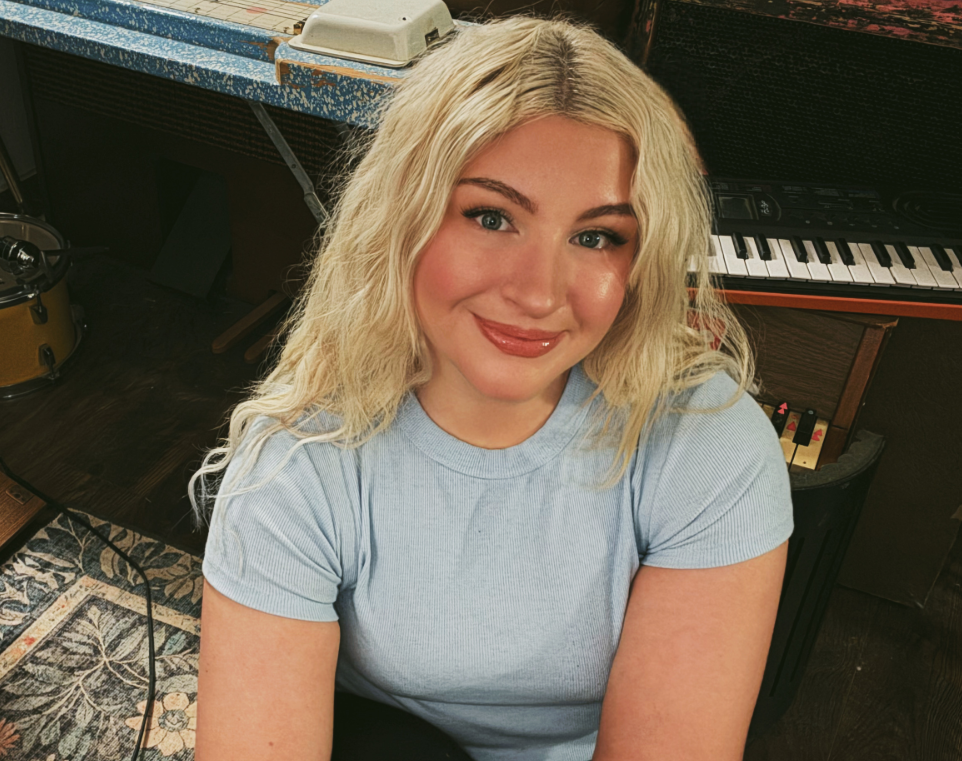
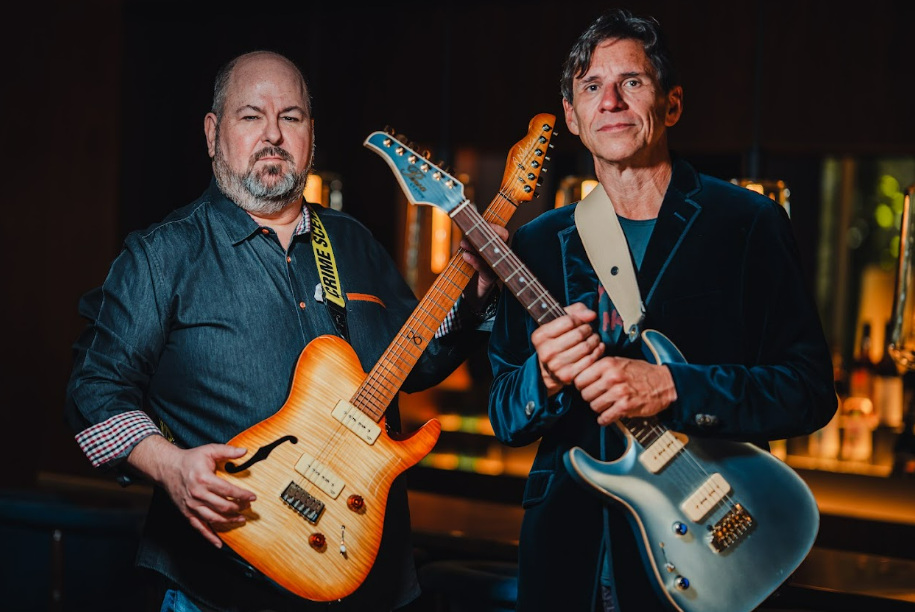
The Wind have always treated growing up as something worth documenting in real time. On “Party Like A Rock Star”, they catch one of its funniest stages: the moment when teenagers start testing out confidence, building their own idea of cool and behaving for one evening as though the whole city belongs to them
The drums come in with purpose, the guitars give the production a pop-rock bite, and the vocals carry the bright, open delivery that has become central to The Wind’s sound. Everything moves quickly. The arrangement keeps changing in small ways, adding little lifts and rhythmic accents that keep the song in motion.
The strongest part is the chorus. It lands with the kind of immediacy this title needs, built around voices coming together rather than one member carrying the whole moment. The group sound matters here. It gives “Party Like A Rock Star” the atmosphere of friends shouting the same words across a crowded room, each voice adding another layer of excitement.
Some songs arrive with a story attached. Others pick up extra weight while they are still being made. For Nashville songwriter loraine, “everywhere i go” belongs firmly to the latter camp.
The song began with memories of friends she lost during her late teens and early twenties. Her response was to keep going.
That decision sits right at the centre of “everywhere i go”. Grief here has movement. It walks outside, catches sunlight, hears insects buzzing in the heat and carries the people attached to those memories along with it.
Recording the vocals outdoors at Polychrome Ranch in Hartsville, Tennessee gave the song its defining character. Cicadas made their way into the recording alongside acoustic guitar, and their presence matters. You can hear an actual environment surrounding loraine’s voice. It is a gorgeous choice. Highly Recommended!
Indie rock and classical music education usually seem far apart. But one person brings them together: Rebecca McDonnell. She takes on the entire process of creating her singles herself. It is a demanding task, which is why new recordings appeared on Spotify fairly rarely. But in 2026, the instrumentalist and singer returned with a string of releases. The newest of them is Won’t Regret It A Bit.
The main message of Won’t Regret It A Bit is believing in yourself, embracing your individuality and refusing to follow other people’s opinions. The sound takes us into the ’80s, a time some might call genuinely free. The single is packed with electric guitar, carrying the spirit of freedom and biker fun. In the second half, Rebecca McDonnell adds simple dance beats, taking us to a pub in a small provincial American town.
Another key element is the vocal, which greets the listener and sees them out. Her voice arrives within the first few seconds. It is a fairly powerful vocal with a defiant edge, there to strengthen the mood the song needs. The ending brings a major-key vocalise and laughter, carrying a sense of joy and the freedom to be yourself. Here, the vocalist comes across as a storyteller from that very pub, telling us the story of the protagonist, from rebellion to finding harmony with oneself.
The duo of instrumentalist Gumpi Falcon and singer William Serralles have kept their single releases fairly selective this year. Heavy Set Woman clearly favors quality and ideas over quantity. With their new song, Girl, the team explores rap-pop for the first time.
Heavy Set Woman are known for mixing funk, rock and other genres. This time, the combination is seasoned with an expressive Spanish rap delivery that carries plenty of character while keeping the tone light.
Drums and other traditional instruments greet us first. They create a hypnotic atmosphere, at times recalling the calmer side of Gorillaz. There is plenty of funk here, while the leading role belongs to the saxophone. The melody works as a time machine, sending us somewhere between past decades, Ancient Egypt and even the jungles of the Stone Age. In this setting, William Serralles comes across less as a contemporary rapper and more as a kind-hearted shaman retelling a story that began at the dawn of time.
The main lyrics come from William Serralles, an interesting choice for a song titled Girl. Female backing vocals also play an important role, bringing encouragement and shaping the mood. They become the element that turns Girl into a story about generations of proud women.
This sounds like a must-have for women of all ages. Playfulness and depth, resilience and forward movement: Gumpi Falcon and William Serralles have filled the track with meaning. Regardless of gender, Girl suits anyone looking for something beyond a simple summer vibe.
BobbyAI comes to us with the single Forever Bionic, once again turning to the subject of AI. Here, the neural network takes on a living, vulnerable presence, driven by a desire to grow and evolve.
A mechanical vibe greets us from the opening notes. Yet the idea behind Forever Bionic heads in a different direction. The sharpness of the sound gradually softens, and we hear a human voice with a slight sense of strain in it. BobbyAI has created a rich and fairly multifaceted track. Pop and electronic elements, dance music and trance all come together within one cohesive melody. The music shows us the path of its bionic heroine, from hardship to success. Rhythms and moods keep shifting, showing that the road is complicated and filled with obstacles ahead. The open ending gives us a chance to sense the horizons visible to this unseen heroine, adding a cinematic quality to the track.
Forever Bionic fits well into current trends, with the transformation of AI unfolding right in front of us. It works well for a dance playlist or a selection of motivational songs.
A piano opens “The Well,” and that alone tells you something changed. Hilary Cousins built his name on folk-rock arrangements – drums, guitars, the usual scaffolding – and here he strips that scaffolding away entirely, at least at the start, and lets Chris Ranney‘s acoustic grand carry the first minute alone. The stillness is almost formal, deliberate in a way that feels closer to a chamber piece than a singer-songwriter cut. Cousins enters over it with a memory that sounds pre-worn, like something turned over hundreds of times before it ever reached a microphone.
Produced by Cousins alongside Mike Pappas, the single pulls its material from rural New England, childhood, faith, and a specific person whose presence keeps shaping how the narrator understands family. None of that gets stated plainly. It arrives through pacing: the song takes its time getting anywhere, and that patience is the point. Space accumulates around the central relationship rather than explaining it.
Ranney’s piano work goes well past accompaniment. The chords move in circles, approaching resolution and then sliding past it into another phrase, which keeps the harmonic ground under Cousins’ vocal in constant, quiet motion. The choice of instrument matters here, an acoustic grand rather than anything digital, with a lower register that has real physical weight and a decay that fills the space a thinner sound would leave empty. Ranney supplies rhythm, harmony, and forward motion simultaneously, while somehow keeping the lyric front and center rather than competing with it. Live-room discipline, essentially, even though the piano and the original vocal take were reportedly assembled through a more mechanical, layered process than that implies.
The arrangement widens gradually, and the widening is where “The Well” earns its shape. Pedal steel enters first, pulling in a country coloration that ties the song back to the farms and open landscape of Cousins’ New England references. Background vocals follow, and the moment they arrive, the song stops sounding like one person’s private recollection. Guitars, drums, and bells build toward a crescendo, each layer nudging the track’s social register up a notch, private memory sliding toward something closer to communal observance, the backing voices carrying a trace of congregation rather than just harmony.
What holds the whole thing together is restraint. Cousins had drums and guitars available from the start of the session and chose to delay them, letting piano establish the emotional register before anything else got to speak. That’s a confident structural decision for an artist known for a fuller, more populated sound, betting that a single instrument and a well-placed memory can carry a full minute of a listener’s attention before the rest of the band even shows up. On “The Well,” the bet pays off.