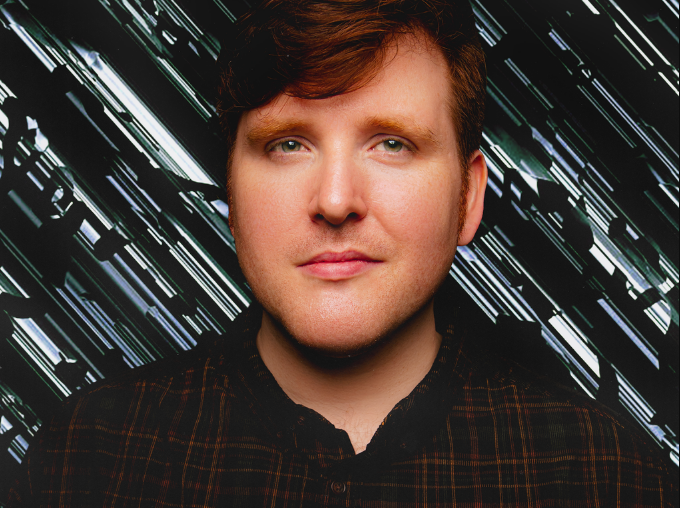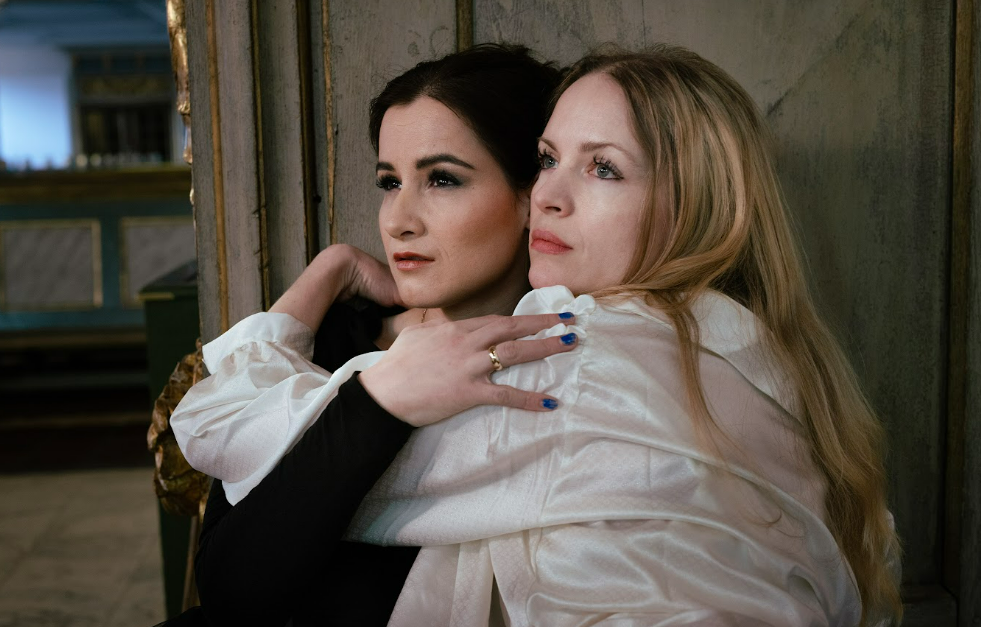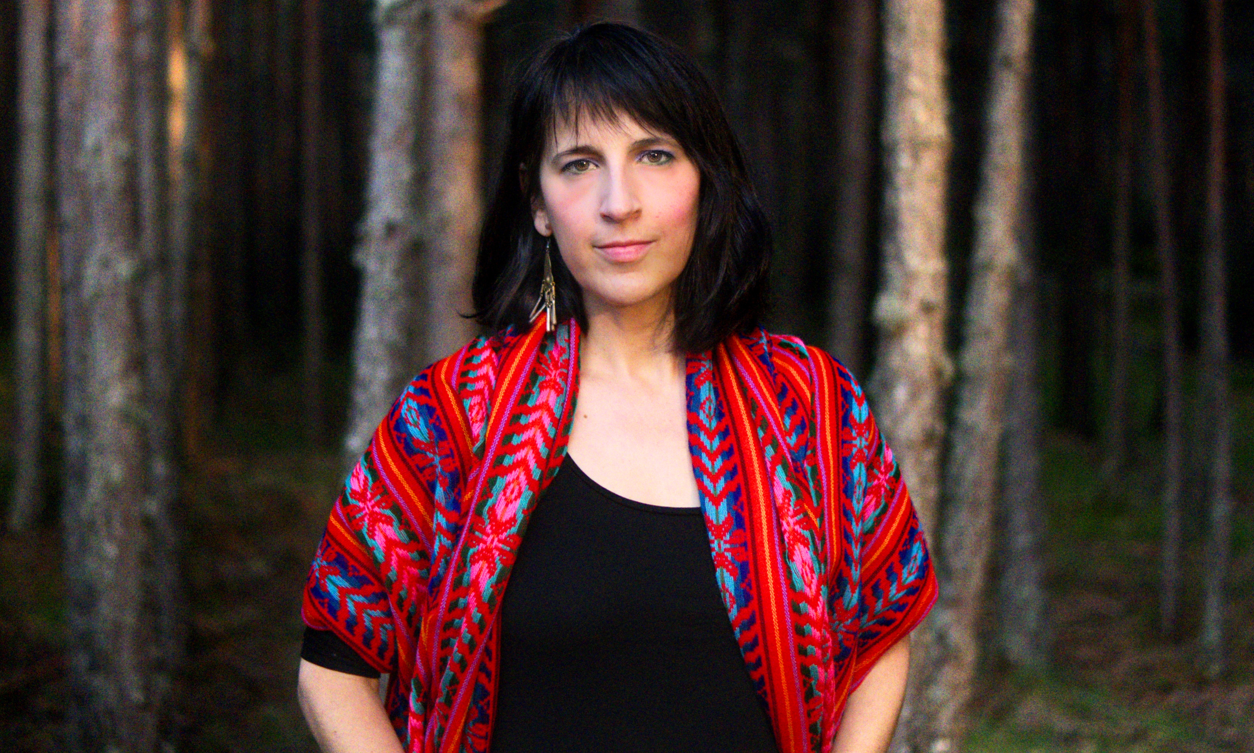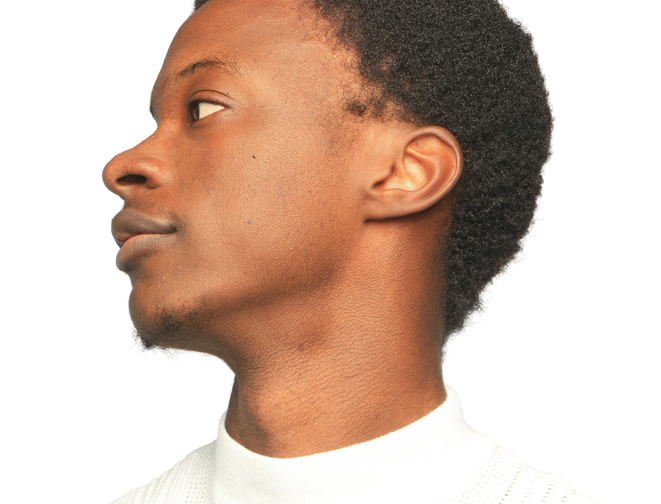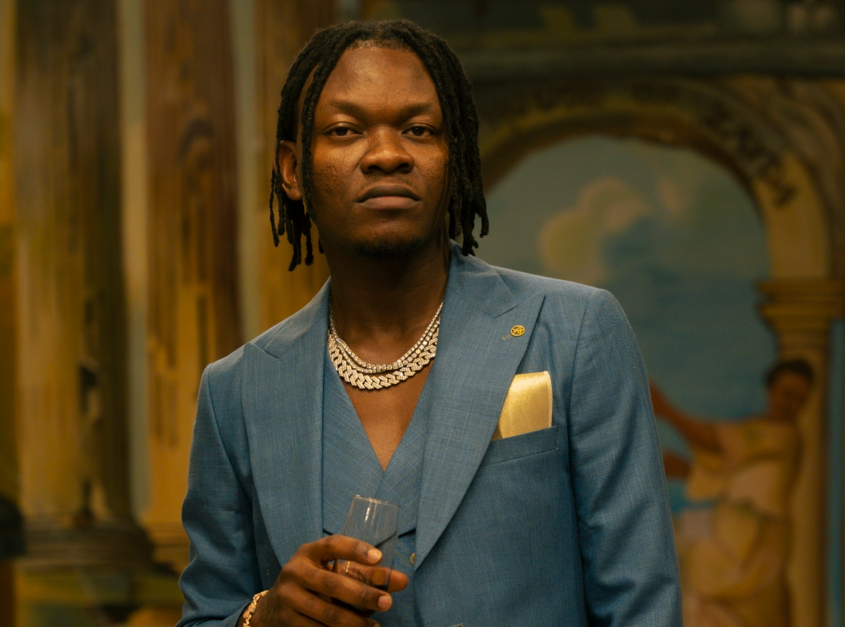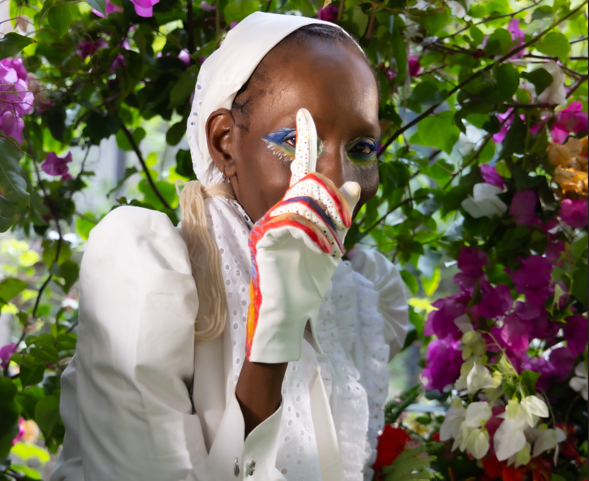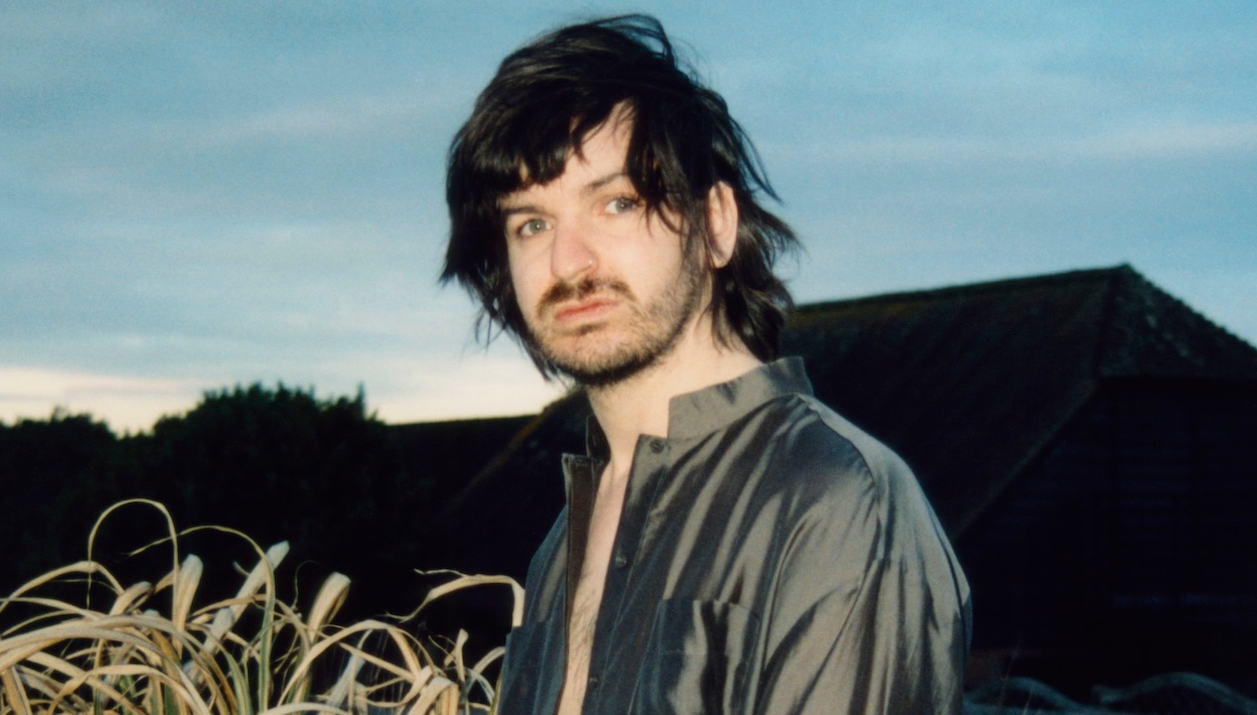

Floyer’s debut album, “The Last Tickets to the Show,” out October 30, assembles twelve characters inside a mysterious theatre, where spectators become trapped watching increasingly disturbing performances. Written, sung and produced by Floyer, the record unfolds across two acts, exploring identity, obsession and the complicated pleasure of watching other people’s lives. Its characters include a voyeur drawn towards a neighbour’s secrets and a grieving figure who would welcome a haunting for another chance at companionship.
Behind those carefully developed stories sits an artist with a playful approach to making music. An accidental recording of Floyer’s cat, Popcorn, helped unlock the chorus of “Screaming At Me,” earning her a place on the album. In our conversation, Floyer discusses revisiting songs written years apart, the demands of producing a debut, and how beginning to perform live brought the album’s central concerns into everyday life. After years spent writing characters under observation, Floyer is stepping onto the stage.
Hi Floyer, it’s lovely to speak with you. I keep returning to the word “tickets” in The Last Tickets to the Show. A ticket promises admission, yet “last” introduces urgency and scarcity before the music begins. Why did the album need an audience waiting outside its title?
The title actually comes from one of the songs on the album, Wonder At The View, where two people manage to get the last tickets to a show. What starts as an exciting night out becomes something much more sinister when the audience realises they’re trapped inside watching these increasingly disturbing performances.
I liked the idea of taking that concept and turning it into the album itself. Each of the twelve songs tells a different character’s story, almost like watching a series of performances where you never quite know what’s coming next. Some are tragic while others are almost playful in how dark they are.
I think the word ‘last’ creates that sense of urgency. There’s something ironic about it too. In Wonder At The View, the audience thinks they’ve bought tickets to a show they’ll eventually leave when in reality they might never get out. I wanted that same feeling of curiosity and unease surrounding the album. You’re invited to take your seat and watch but you don’t necessarily know what you’ve signed up for.
Where exactly does the listener enter your forgotten theatre? Are we taking a seat among the audience, slipping backstage, or arriving after everybody else has gone home?
I imagine the listener taking a seat among the audience without really knowing what they’re about to watch. The theatre itself is quite mysterious and almost forgotten by the outside world but somehow the performances are still going on.
The album is divided into two acts. In the first act, you’re introduced to the characters and their stories as though you’re watching their lives unfold from a distance. In the second act, the performances become more direct and there’s a stronger sense of the characters taking control of their own narratives.
I also like the idea that the audience doesn’t have complete freedom. In Wonder At The View, the spectators are trapped inside the venue yet they continue watching even as the performances become increasingly disturbing. I think that reflects our fascination with other people’s lives, particularly when we’re witnessing something we probably shouldn’t be. You’re there to observe but there’s no guarantee you’ll be able to look away.
Twelve characters means twelve voices competing for your attention while you are also writing, singing and producing the record. Which character changed most dramatically between the first idea and the finished song?
A lot of the songs were written before I’d even conceived the idea for the album. As I started developing the project, I revisited older songs to see how they could fit into this world of performance and identity. Almost half of the album consists of older material while the other half was written to bring the concept together. With a few years between writing and finishing some of them, the characters changed quite a bit.
Each song has its own character with a name and an accompanying story explored through The Floyer Character Study. They’re not necessarily traditional names but identities that reflect the character’s role or experiences.
I think Will You Haunt Me?, whose character is called The Victim, is probably the strongest example. I wrote the first verse years ago but when I returned to it, I decided to develop it into a ghost story. The character would rather be haunted by someone or whatever remains of them than accept losing them completely. That became quite personal as I explored the desperation of holding onto someone even when their presence is no longer comforting.
Another example is The Figures, represented by The Possessed. It originally explored a child’s fear of mysterious figures appearing in the dark. As the song developed, that relationship became much more unsettling and almost resembled possession by the bridge. I took it in a more abstract direction and left some ambiguity around what’s actually happening and whether the figures are even real.
Both songs show how much my storytelling has developed over the years. Returning to an older idea gives me the opportunity to see a character differently and I like leaving enough ambiguity for listeners to reach their own conclusions.
Which character are listeners most likely to misread at first, and what small detail offers a way into their real nature?
I think The Voyeur from Neighbours is probably the easiest character to misread. At first you might assume she’s just a curious neighbour who’s accidentally witnessed something she shouldn’t have. She seems like an innocent bystander who’s stumbled upon someone else’s dark secret.
But as the song progresses you realise she’s not particularly innocent herself. She’s hiding something equally disturbing and rather than being frightened by what she’s discovered she’s fascinated by it. I like the irony of two people watching each other while both have something to hide.
The line about watching someone as they watch you is quite important because it changes the dynamic. Suddenly it’s not just about observing another person’s life but about being observed yourself. Neither character has the moral high ground.
I wanted to explore that relationship through the production too. In the bridge I introduce string orchestration almost as though the two characters are falling in love. There’s something deliberately romantic and theatrical about it even though the circumstances are disturbing. It’s a twisted version of a love story where their shared secrets and morbid curiosity bring them together.
Neighbours has a slightly playful quality despite how dark the story is. I think that makes The Voyeur even more unsettling because she doesn’t necessarily see herself as a bad person.
When you were producing the album, what musical decision began as a technical solution and gradually became part of a character’s personality?
I think Screaming At Me is probably the best example although it happened completely by accident. When I’m writing and producing a new song, my cat Popcorn will often sleep next to me for hours. I was recording vocals for a demo one time and she started meowing because she wanted to be let out of my room. Her meowing ended up being recorded through my microphone. I started playing around with the recording, time-warping and cleaning up the audio until Popcorn suddenly became my backing vocalist. At the time, I was stuck on the chorus of Screaming At Me. I’d produced the instrumental but couldn’t figure out what I wanted to do lyrically. Once I’d added Popcorn’s vocals, the idea of my cat screaming at me became the chorus and I developed the rest of the song from there.
What’s quite funny is that the song explores a relationship where intimacy is restricted to something physical as a way of avoiding emotional investment and the possibility of getting hurt. There’s a lot of overthinking and emotional avoidance going on and somehow my cat screaming in the background became part of that story.
It’s one of my favourite examples of how unpredictable producing your own music can be. Now Popcorn has an official place on the album, which I find quite amusing.
Producing your own debut gives you authority over every detail while also making you the final person responsible for ending the work. Which decision would you have happily handed to somebody else?
I think I’d happily hand over the mixing process. I love writing, arranging and producing my music because I get to experiment with sounds and make creative decisions that reflect the stories I’m telling. But mixing is probably the part I’m least comfortable with, particularly the more technical aspects.
I have a background in music production so it’s not that I don’t understand what I’m doing. I just find there’s a difference between having a creative vision for a song and making all the technical decisions needed to get it sounding exactly how you want. I can spend hours adjusting tiny details until it becomes difficult to tell whether I’m improving something or changing it for the sake of changing it. I’d appreciate someone else taking care of some technical decisions while I focus on the creative side. Having someone else handle the mixing would let me concentrate more on songwriting and production, which are the parts I enjoy the most. It would also be interesting to hear how another person interprets the music after I’ve spent so much time working on it myself. That being said, I really value having creative control over the album. Because it’s such a character driven project I wanted the production to feel connected to each story rather than having every song follow the same formula.
After spending so long writing people who watch, perform and conceal parts of themselves, how has your own behaviour changed when you enter a real room full of strangers?
I’ve always been quite observant of other people so I’m not sure the album has necessarily changed that about me. It’s probably made me more conscious of it. I find people interesting, especially the little things they do without realising it and how differently they might behave depending on who they’re around.
I also find complete strangers fascinating because you can never really gauge who someone is from a brief observation or even a conversation. Everyone is essentially a mystery. Someone might be a completely different person around their family compared to their friends or colleagues and you might never see those other sides of them. I suppose the album is partly an examination of the individual and society and how we construct our identities in relation to other people. Writing these characters has made me think more about how much of ourselves we actually show. I think everyone performs to some extent even outside of a theatre. The person someone appears to be isn’t necessarily who they are underneath.
What’s quite interesting is that I’ve only recently started venturing into live performance myself this year, partly in preparation for the album’s release. I’ve spent so long creating a fictional world centred around a theatre with characters who are constantly being watched or performing and somehow I’ve ended up stepping onto a stage myself. There’s something ironic about writing from the perspective of an observer and then becoming the person being observed. I hadn’t planned for my experiences to mirror the album’s themes in that way but I quite like how it’s happened. It’s made me more aware of the relationship between performer and audience and how differently we might see ourselves compared to how others see us.
When was the last time writing a song made you change your mind about yourself?
I think Protagonist is probably one of the songs that made me reflect more on myself. It’s about the difference between who you believe yourself to be and the version of you that exists in other people’s minds. People can form completely different opinions of the same person, sometimes based on very little information.
Something I thought about while writing it was the different roles we play in other people’s lives, even those of complete strangers. You might be a passing character in someone’s story without ever realising it and the way they remember you could be completely different from how you see yourself. Those perceptions can also shape our own identities, particularly when we become conscious of them.
I find the morality of that interesting too. I don’t necessarily believe anyone can be a completely good person because morality isn’t always straightforward. We can have good intentions and still hurt people or do something that seems reasonable to us but is interpreted differently by someone else. We can all see ourselves as the protagonist of our own lives while potentially being the villain in someone else’s.
Some people will also form an opinion of you that simply cannot be changed. You could spend so much time trying to please someone or convince them that you’re a good person but if they’ve already decided otherwise nothing you do will necessarily change that. Writing Protagonist made me reconsider how much importance I place on other people’s perceptions of me. Ultimately I can control my actions and intentions but not the version of me that exists in somebody else’s mind. There’s something freeing and a little unsettling about accepting that.
What do the people closest to you understand about Floyer that listeners would probably never guess from the music?
I think people who know me personally would describe me as quite talkative, which might be surprising considering how dark and mysterious some of my music can be. I enjoy exploring unsettling subjects and creating strange characters but I’m not necessarily as serious or mysterious as the music might suggest.
They’d also be privy to how much work goes on behind the scenes. Over the last few months, a lot of my free time has been spent at my laptop working on the album, producing music, developing my website, planning social media content or researching opportunities. It’s not particularly glamorous and I think people sometimes underestimate how much administrative and organisational work goes into being an independent artist.
I’m constantly coming up with ideas and trying to make them happen, sometimes at the very last minute. I’ll suddenly decide I want to film a music video or organise something for an upcoming performance and then I’m figuring out how to pull it all together in time. The people closest to me are probably quite used to that by now.
There’s a playful side to how I approach music too. I enjoy experimenting with unusual ideas and finding humour in darker subjects, which comes through in songs like Neighbours and Screaming At Me.
I suppose what people closest to me understand is that Floyer isn’t a separate personality I become. It’s a creative extension of my interests and imagination. The finished music might feel like an elaborate theatrical world but behind it is usually just me sitting at my laptop with far too many ideas and trying to find enough time to bring them all to life.
Once The Last Tickets to the Show belongs to listeners, how long do you want to remain inside this theatre with its characters?
I think I’ll remain in the theatre for a little while longer. I’ve spent years writing some of these songs and developing the world around them so it would feel strange to walk away as soon as the album is released. There are still things I’d like to explore with the music and I’m interested in how the songs might evolve beyond their original recordings.
But I also think there’s a point where you have to let a project exist without constantly trying to explain it. I know these characters and their stories quite intimately but listeners will interpret them through their own experiences. They might sympathise with characters I never intended to be sympathetic or find meanings I hadn’t considered. I think that’s one of the most exciting parts of releasing music. In a way the audience becomes part of the storytelling process, which feels fitting for an album about observation and performance.
I don’t want to spend forever looking backwards either. I have other stories and musical directions I’d like to explore and I’m already drawn towards ideas that feel a little less defined, perhaps more atmospheric and hazy than the world I’ve created for this album.
So I don’t think I’ll be closing the theatre permanently but I won’t be staying in it forever either. Eventually I’d like to leave the characters on the stage with the audience free to decide what happens to them after the final curtain. After all, the tickets might be the last ones but that doesn’t necessarily mean the stories have to end.
Disclosure: This article was produced as part of our editorial partnership program. The author’s time and editorial work were compensated by the artist or their representatives. Publication at no extra charge. The opinions and evaluations expressed are the author’s own and may differ from those of our readers or the general public.