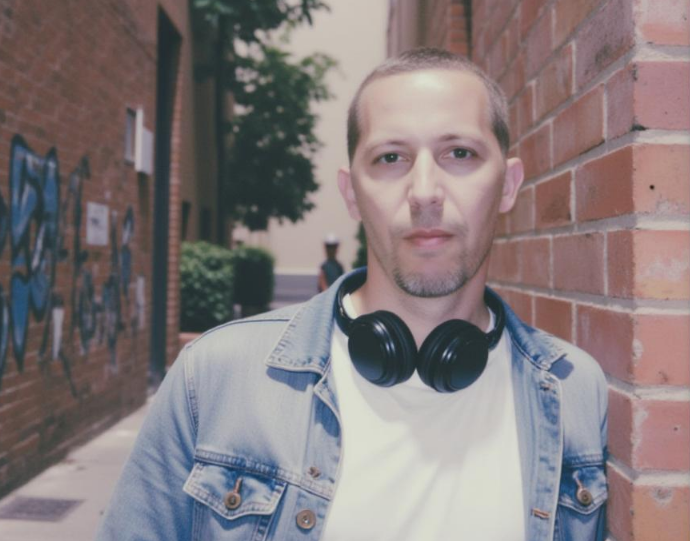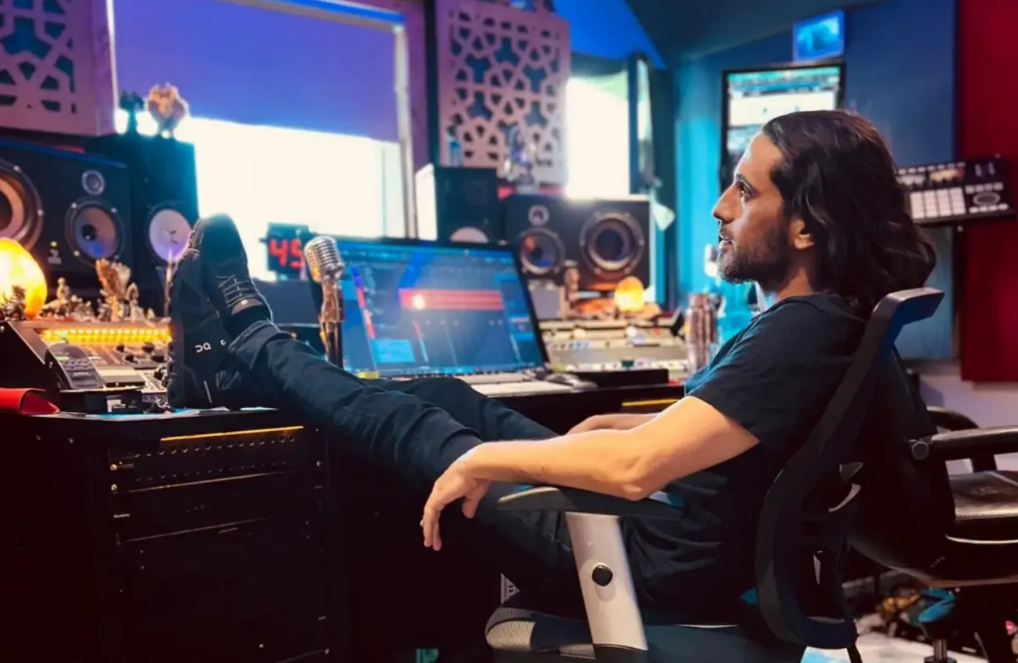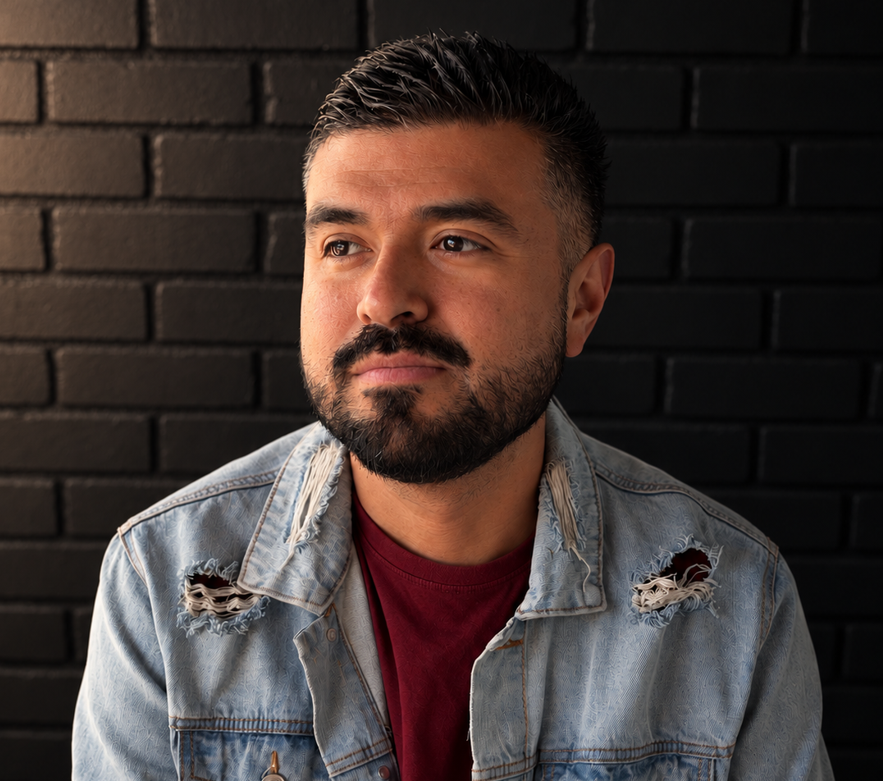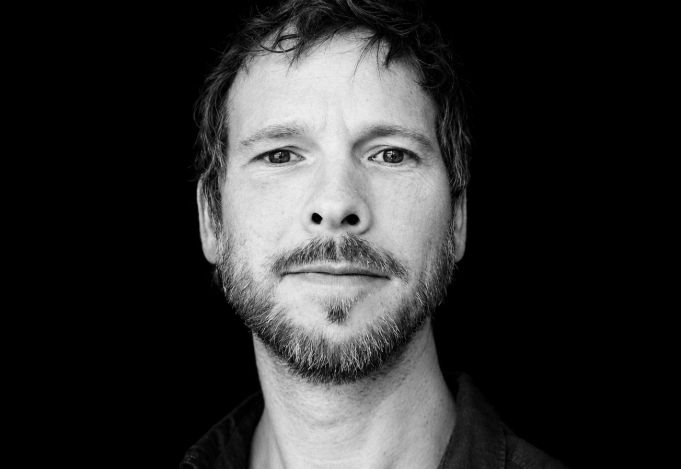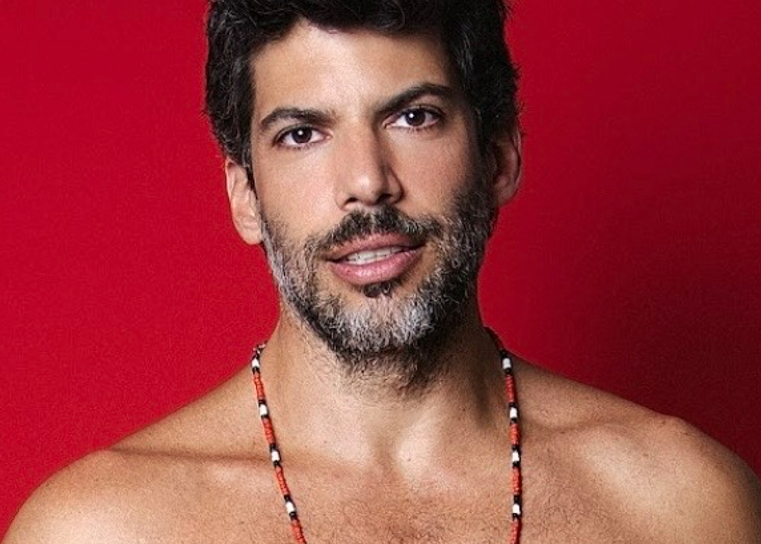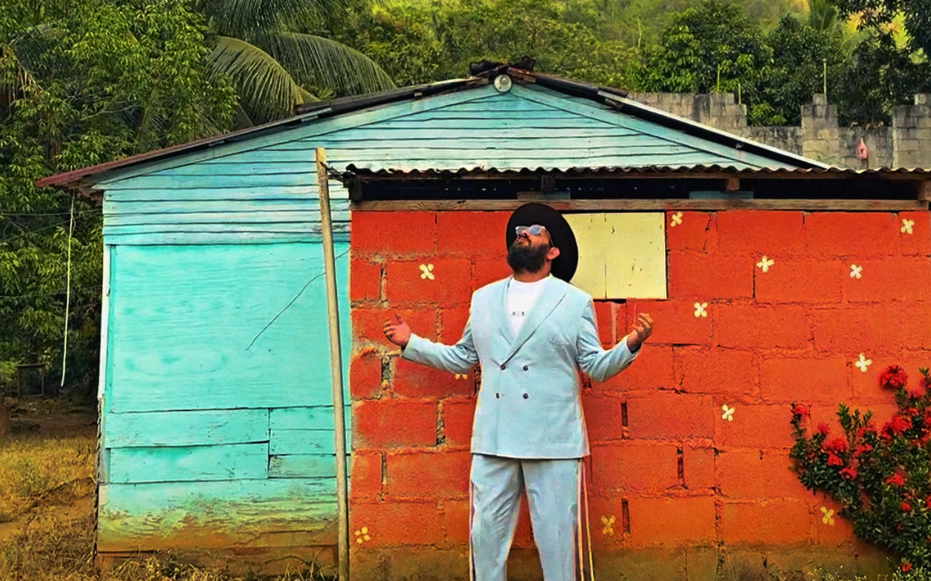

The name looks coded. The album title looks even stranger. Dr AdeN HoD and Q-NativeIm arrive carrying punctuation, altered letters and the quiet suggestion that every choice has a second meaning. Before the eleven songs reveal their deeper logic, a baritone voice draws the listener through acoustic rock, blues, dark folk and heavier alternative textures.
Names such as Nick Cave, Leonard Cohen, Tom Waits and Johnny Cash provide familiar coordinates, while HoD follows a private compass shaped by instinct, identity and atmosphere. His music keeps one foot in traditional songwriting and the other near a darker threshold, where a melody can conceal another intention and a familiar word can open into several meanings. Our conversation begins with the code printed on the cover.
Hi Dr AdeN HoD, it’s great to speak with you. Before anything else, how should Q-NativeIm be pronounced?
Hello everyone, and thank you for having me! It’s a pleasure to speak with you as well. The title is pronounced “Q – Native – I am,” with the final part representing the words “I am.” It’s a combination of sounds and meanings that reflects the message behind the album.
Now that we can say it properly, where did that album name come from?
The title Q-NativeIm represents a personal journey toward authenticity. “Q” symbolizes the key, “Native” represents nature and our natural essence, while “I am” refers to personal identity. Together, they express the idea of discovering the key to one’s true, genuine, and natural self.
The “Dr” immediately creates a little distance between the artist and the person. Is Dr AdeN HoD a character, a shield or your most accurate self-portrait?
Dr AdeN HoD is certainly an artistic persona that allows me to separate my creative identity from my private and professional life. After founding and leading several musical projects of my own, I decided to start something entirely new, this time under my own name.
I shortened my surname to make it easier to pronounce. My friends jokingly pointed out that many artists invent titles to put in front of their stage names, while I actually hold a PhD in science. So why not use my real title? That’s how Dr AdeN HoD was born, combining artistic freedom with my real identity.
Do you build melodies around the natural depth of your baritone, or do you enjoy forcing your voice into uncomfortable territory?
I prefer to let my voice remain natural. My baritone has its own distinctive character, and I don’t believe in forcing it to sound artificial.
At the same time, my natural voice has a remarkably wide vocal range, allowing me to reach surprisingly high notes, which I often explore in my backing vocals.
However, I prefer to keep the natural depth and tonal character of my baritone at the forefront, as I consider it an essential part of my musical style, identity, and authentic self. Ultimately, I let the melody and emotional atmosphere guide my vocal expression.
I have to ask the slightly unfair influences question. Which comparison—Nick Cave, Leonard Cohen, Tom Waits or Johnny Cash—flatters you the least?
In fact, I’m flattered by all these comparisons, as they are all exceptional artists with distinctive voices and personalities.
Johnny Cash was actually one of my early musical idols, while comparisons to Nick Cave, Leonard Cohen, and Tom Waits mostly come from listeners and reviewers.
I appreciate those comparisons, but I believe my musical identity has developed through a much broader range of influences.
I’m curious about the song that kept disrupting the album sequence. Which track moved around the most before Q-NativeIm reached its final order?
Interestingly, I didn’t approach the album with a fixed sequence of songs from the beginning.
The songs were written and recorded over time, and I gradually developed a sense of how they should fit together.
My main priority was to create a natural emotional flow throughout the album rather than focusing on one particular track.
Which instrument brings out your worst musical habits? I’d love to know what happens when these songs leave the studio. Which track from Q-NativeIm are you most eager to play in front of a room for the first time?
I’m primarily a guitarist, and I learned to play other instruments along the way. So, I would definitely say the guitar.
Sometimes I tend to make things unnecessarily complicated, exploring more complex arrangements and technical virtuosity that don’t always serve the song. I’ve learned that sometimes less is more, and simplicity can be far more powerful.
As for live performances, I’m very curious to discover how audiences will respond to the different moods and atmospheres of the album.
One song I’m particularly intrigued by is Daily Sun. It’s a very simple composition with a captivating, almost hypnotic melody that seems to stay in people’s minds effortlessly—or at least that’s what listeners tell me.
I’d love to experience its effect on a live audience.
How do you catch an atmospheric arrangement trying to hide a weak lyric?
For me, lyrics and music must support each other. If the words don’t convey the emotion or meaning I intended, no arrangement can truly compensate for that.
I usually return to the basic melody and lyrics, sometimes stripping the arrangement down to its simplest form to see whether the song still works.
Which decision on Q-NativeIm would you defend hardest in a label meeting?
Above all, I would defend my artistic freedom and the natural, authentic character of my music.
I believe in preserving the original spirit of a song, exactly as it emerged from me creatively.
Of course, I’m always open to constructive advice, new ideas, and suggestions that could improve an arrangement or production. Music is also about collaboration and exchanging perspectives.
However, at its core, the song must remain true to its original inspiration and emotional identity. That’s what gives music its natural feeling, and it’s something I would never compromise.
What musical risk has completing this album given you the courage to take next?
Completing Q-NativeIm has encouraged me to explore new musical directions without losing my artistic identity.
I enjoy challenging myself, and I believe every new production should offer something different or better than the previous one. My next step is to experiment further with arrangements, sounds, and musical expression while remaining true to my natural style.
Essentially, everything I do, especially in music and art, comes from an inner feeling. I follow that feeling unconditionally. It’s the first instinct, the first heartbeat of the artistic vein from which everything else eventually emerges.
That’s why I will always follow my instincts and keep moving forward, wherever they may lead me musically.
This article was produced as part of our editorial partnership program. The author’s time and editorial work were compensated by the artist or their representatives. Publication at no extra charge. The opinions and evaluations expressed are the author’s own and may differ from those of our readers or the general public.