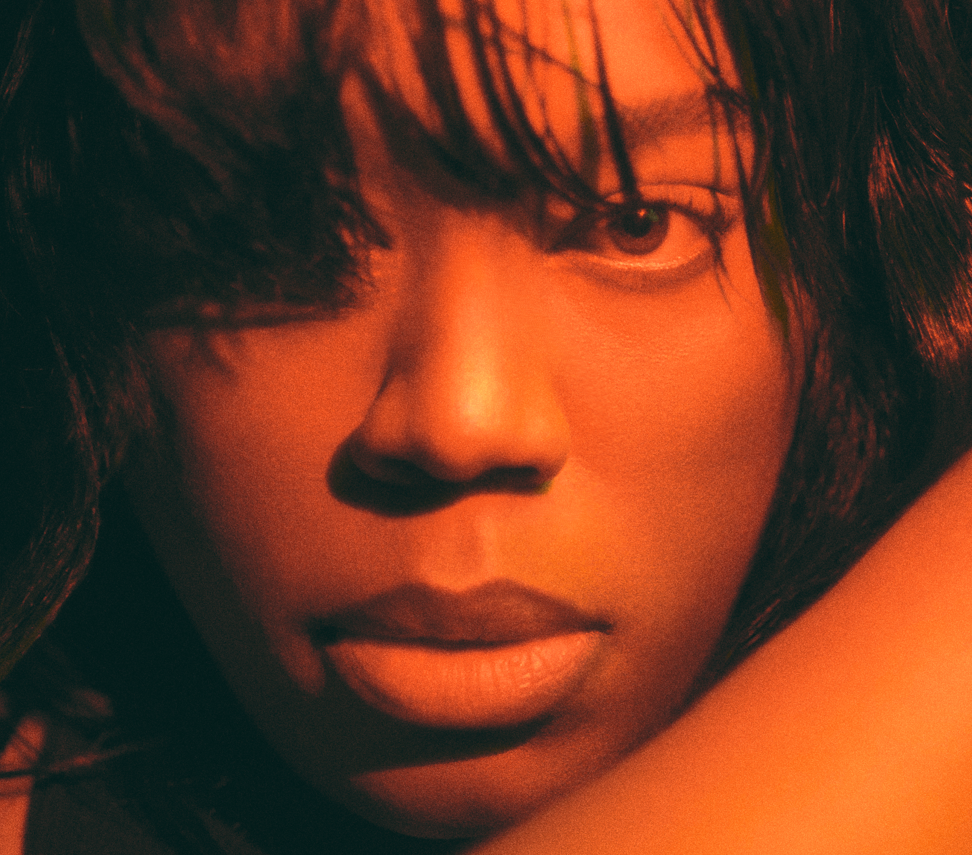

Denise Mangiardi is a pianist, singer, composer and arranger whose work spans New York jazz clubs and orchestral commissions. Her ninth album, Apparitions, includes three songs recorded with the Royal Scottish National Orchestra in Glasgow. One of the album’s songs, Gilded Cage, began with seven quavers she kept hearing while walking her dog. She put a bass line beneath them, and by the time she got to the studio, she could hear a place for strings.
In conversation, Mangiardi is equally particular about the details she remembers. She can still picture the yellow sun on a letter Chick Corea sent to an aspiring jazz pianist she knew in New York. She also tells us how a dream about Ayrton Senna led to an orchestral piece with drawings by a class of second-graders, and why she feels most at home singing from behind the piano.
It’s lovely to speak with you, Denise. Before we get into music, what does a typical day look like for you? Are you someone who starts the morning with music, or do you prefer to ease into the day first?
I always make sure of one thing only. My cup of coffee. That is the most important thing of my day. I usually listen to music when I am driving, or cooking. I love to listen to the radio as well throughout the day. I normally practice and or write in the afternoon as I am not really a morning person. I am also a workaholic, so I often work late into the night.
When you sit down at the piano in a particular mood, do you find that your emotions naturally influence what you play, even when you have something completely different in mind?
I have to disregard anything negative or overly positive in my mind. The great thing about the acoustic piano is that is very quickly zooms me into the frequency space and I find that I can focus quite quickly. If I am writing a new piece, I make a decision to write so much in a day and I am usually very good and sticking to my routine. So I would say, no. My emotions do not influence me too much because I place them aside. I know that sounds strange but it is amazing what happens when you dig deep into the sort of trance state . It defies emotions by letting them come out differently rather than outside emotions forcing their way in.
As a composer and arranger, you have such a sophisticated musical vocabulary. Have you ever found yourself using music to express something that might have been difficult to put into words?
Absolutely, that is one of the most beautiful things about music. It says a lot more than I could ever come up with in my wildest dreams with words.
Even if I could come up with the words, I’d have to be a great poet to find the mystery in concealing the obvious. It reminds me of a fantastic Scottish poet that I love, Norman MacCaig. He makes you really search for the meaning behind the words he has written. That is a gift. Words are not my gift but I like to think that music for me, allows me to create the same kind of mystery.
Looking back at Apparitions, was there a particular song that took an unexpected direction during the writing or recording process? Did its meaning change along the way?
One of the great things about working with great musicians is that they can really create different nuances that you never knew where there. There were also a few songs, that came out completely different then when I first recorded them. I wrote a song entitled the Gilded Cage. I have no idea , of where it came from and even when I was writing it, I was only just trying to finish a group of 7 quavers that I kept hearing on my walks with my dog. So I began the song with these 7 quavers with a bass. I basically followed it, and the next thing I knew , I came up with something very unusual. It was not intentional but it ended up being a song about Maga and you know who. Everything came so quickly. I thought the song would be a flop for sure. But I went ahead and recorded it against my better judgement and the next thing I realised was; it needed strings.
I took off from there and now it is completely a different song from the song I started out with. It came out great.


You’ve performed in jazz clubs, orchestral settings and recording studios. Each environment brings a different energy. Where do you feel most comfortable, and where do you feel most challenged?
Musicians can sometimes have very particular opinions about the smallest details. Have you ever rejected a musical idea for a surprisingly personal or unconventional reason?
I never in my entire life felt comfortable standing up and singing. But behind the piano, I am fine. It is some kind of mask and or protection but really, the piano is my first way of communicating my music and If I am not playing I feel really detached.
I absolutely feel most at home in a studio. I love recording and being around musicians. I would say that both performing live and being in the studio are two of my favourite things. They really make me feel happy and energised.
Regarding the rejection of a musical idea, would be me trying to sound like someone else or someone that wants me to sound like someone else. That would be easy to reject.
You’ve drawn inspiration from some fascinating subjects, including Ayrton Senna. What was it about his life, personality or legacy that inspired you to create an orchestral work in his honour?
No one has ever asked me that question. I saw his documentary and a few weeks after, I saw him in a dream and he was trying to communicate something to me but it was so strong I did not let it go. What a wonderful person. He was so generous to so many children in Brazil. Strangely enough I received a commission from Orchestra Toronto. The conductor was Brazilian and I told her about my idea to write an orchestral piece about him, as the commission was for the Diamond Jubilee in 2013. The orchestral piece was for children. So I based the entire story on his entire life, starting with the Go-Kart all the way up until his death where he goes up to heaven and meets Curupira (The guardian of the forest) and is told to go down, and save the rainforest which he does. I wrote an entire story line, and an old friend of mine from New York had her entire 2nd grade class draw their own pictures of the things I had described. 35 slides were displayed on a giant screen to go along with the score.It was fantastic. I was so thrilled. The concert also featured an entire Brazilian ensemble Batucada Carioca that played live with the orchestra.
Over the years, you’ve received praise from some extraordinary musicians, including Chick Corea and Al Schmitt. Have there been any compliments that genuinely surprised you or were particularly difficult to accept?
Of course, I always find it hard to believe. That is the typical role of the imposer syndrome. In my heart, I was deeply honoured and I truly respected these musicians. Al was an amazing man. I got to know him and I feel so fortunate. He was great. I really wish that he and Chick were still here with us. I remember a very long time ago, an old boyfriend of mine who was an aspiring jazz pianist in NYC had written a heart felt letter to Chick. Chick wrote back the most amazing letter and he was so kind to do that. He gave my friend lots of hope and the entire letter was full of optimism.
I still remember the letter head. It had a yellow sun on the paper.
At the PizzaExpress Live launch of Apparitions, what was it like hearing the album come to life in front of an audience? Was there a particular moment that felt especially rewarding?
The concert is actually going to be on the 17th of January. So you still have time to come!!! I can’t wait.
Looking ahead, what kind of musical project or creative collaboration would make you immediately excited to say yes, even if it took you completely outside your comfort zone.
I wouldn’t mind playing a role in a movie!
I would love to go back to Glasgow and record a full orchestral piece or have it performed.
I would love to be doing a major film score. I would love to do a performance on the Jules Holland show. They would all be a yes.
Disclosure: This article was produced as part of our editorial partnership program. The author’s time and editorial work were compensated by the artist or their representatives. Publication at no extra charge. The opinions and evaluations expressed are the author’s own and may differ from those of our readers or the general public.