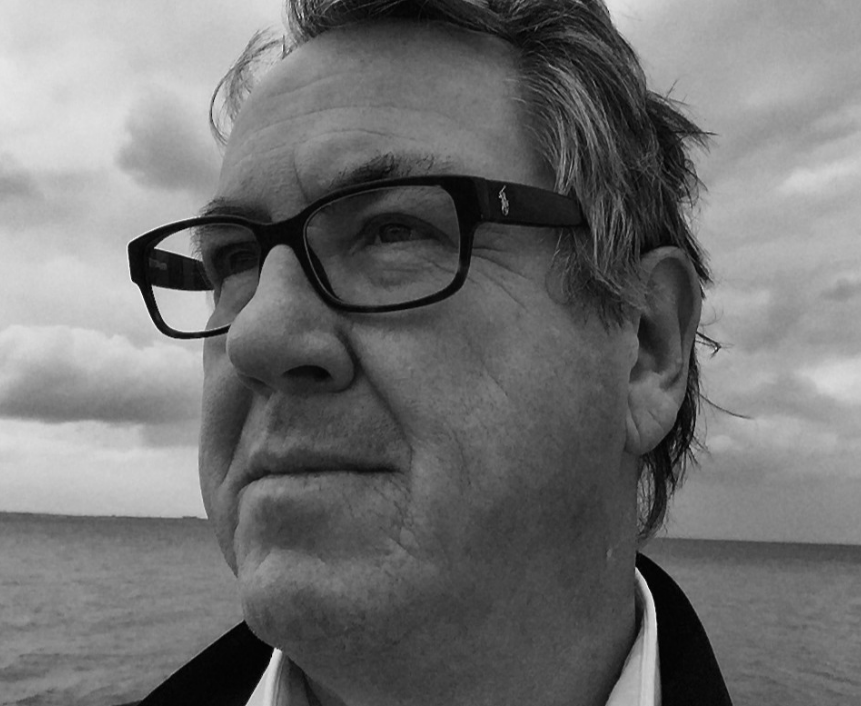
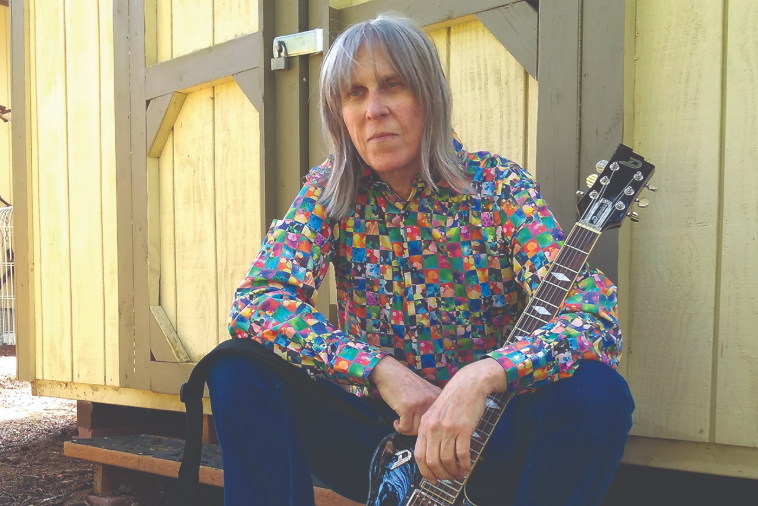
Rusty Reid’s musical life has taken him from Midland and Houston to Nashville, Los Angeles and, eventually, the Seattle area. Texas has remained at the heart of his writing throughout those moves. Over five albums, he has brought folk, country rock and pop together with lyrics increasingly concerned with politics, philosophy and spirituality.
His latest release, ‘Lone Stardust (Masterworks of Texas Songwriters)’, takes a different route through 19 songs written by artists connected to Texas. The record brings familiar classics together with lesser-known personal favourites, including Vince Bell’s ‘All Through My Days’ and Johnny Nash’s ‘I Can See Clearly Now’. In this interview, Reid discusses the cities that shaped his musical identity, the unexpected beginning of the album, his approach to interpreting other writers, his loyalty to the full-length format and the original material planned for his next chapter.
Hello, Rusty! Great to have you with us. You were born in Midland, spent years honing your craft in Houston, worked as a staff songwriter in Nashville, then lived 11 years in Los Angeles, and are now based near Seattle. How has this geography shaped your musical style?
Hola, SoundVille. Thanks for the chance to talk. Yes, geography is very important to me. I consider myself a citizen of the world, though I haven’t yet visited your beautiful and soulful country. My own journey has taken me around the globe, but everywhere I go I take the sense and sensibilities of my origin story with me, which anyone should. And, yes, all of these experiences have contributed to my musical development. Growing up in West Texas, I was immersed in rock and roll and country music, but also Tex-Mex and soul music. Moving to Houston for college, I was involved in the singer-songwriter, folk-rock scene, and that’s where my songwriting made the jump from amateurish and copyist to more original and better quality. I was in no way ready for Nashville when I prematurely moved there. I was signed as a staff songwriter with Peer-Southern Music Publishing, and tried to write in a more country vein, but never really launched successfully. But I learned a lot about the craft. Following that disappointment, I moved briefly out to Los Angeles, where I met pretty much abject failure. So it was back to Houston to finish college, and really begin to apply what I had learned honing my songwriting. By 1984, I thought I was ready to go back to L.A. Alas, once there I was diverted into a great job in sportswriting, so took my eyes off the music ball for many years. Still, the L.A. music scene really got me thinking more “edgy,” and also thinking along more political, philosophical and even spiritual ways. The move to the Seattle area brought about a more nature-based component to my songwriting and essays. I’m still learning and evolving and bringing that new awareness to my music.
Your new album “Lone Stardust (Masterworks of Texas Songwriters)” is a collection of 19 covers by songwriters connected to Texas. How did this list of 19 tracks come together?
The project came together quite suddenly and unexpectedly. My songwriter buddy from Houston and L.A., Steven Beasley, came up to visit and to learn how to use a music recording program. We did two test projects by recording songs we both loved from other songwriters we knew back in our Houston days. These recordings would eventually become the first two songs on the album. After Steve went home, I suddenly thought, “How about an entire album of songs by Texas songwriters.” So I was off and running. It was fun, but a lot of work to distill all such songs I could select down to what could fit on a CD. Basically I just chose the songs that I loved, and thought I could sing with conviction, and these 19 are what I ended up with.

Some of your past singles, like “American Villain” and “The United States of Selfishness,” touched on political themes. How would you describe where “Lone Stardust” fits within your body of work overall?
It’s certainly a detour. But then again, all five of my albums have been something of a detour. My first album, NWXSW, was released in 2001, which was a detour from my previous non-action doing anything musical. It is just a hodge-podge of what I thought of as the best recordings I had at the time. It doesn’t have a continuous sound or theme or continuity. I figured it would be my first and last album. But then 18 years later, out comes Head to Heart, a full-blown “revolutionary manifesto in song,” with an ambitious theme of explaining, in one album, what is wonderful and beautiful in the world, what is truly fucked up in the world, and what it all means. Then in 2023 I go backwards in time by re-recording some of the best of my Houston songs for the album Bayou Line. Then, another twist, as I resurrect lost tapes from my Houston rock and roll band, The Unreasonables. Then on to the Lone Stardust project, which are all new recordings of other songwriters’ songs, allowing me the chance to play and sing outside of my own personal compositions, but with lyrics that are personal to me. After these diversions, I’ll be getting back to newer, original material with the next album, hopefully to be released next year.
You’re known for making generous, full-length albums rather than short “streaming-friendly” releases. Can you tell us about your approach to album length and format?
Yeah, I’m aware that releasing singles and shortened reels is the recommended strategy these days. But since I’m not likely to have any “hits” or viral material, I just figure I’ll organize my catalog into just a few albums, alongside just a few singles mixed in. I’ve always loved double-albums. I like longer form anything: articles, books, etc. Half an hour or 45 minutes is not enough to spend with an artist, if you ask me. So I basically stuff my albums to whatever a CD can hold: that’s 78 minutes. Head to Heart had only seconds to spare. I’m guessing there are others like me who prefer the long form, and if they find an artist they like would be willing to spend a full hour-plus with them. After all, concerts are often two hours, three hours, even longer. Why should albums be so short these days, like they were when vinyl itself imposed that strict limit?
The album’s lead single, “All Through My Days”. How did you land on that particular song as the first single?
I didn’t want my “Texas album” to become a hits-only collection or the usual suspects of “best” Texas songwriters. So Vince Bell’s “All Through My Days” was one of those two songs Steve and I recorded that kicked off this project. In deciding on the songs to promote on the album, I thought this would be a good one to establish that this is an unusual album, not what you would perhaps expect from the album’s sub-title. The second single promoted was “Alchemist,” another obscure song, this one written by Zack Kibodeaux. And finally, a well-known tune, “I can See Clearly Now” as the third promo off the album.
“I Can See Clearly Now” by Johnny Nash is a song nearly everyone knows. What did it mean to you to take on such iconic material?
After deciding to try to compile an album of “Masterworks of Texas Songwriters,” “I Can See Clearly Now” was one of the first songs added to the list. I’ve loved this song since the moment I first heard it in 1972. I call it the perfect pop song. It’s got a great, original melody, wonderful lyrics, and uplifting message. Plus, it features a groovy reggae rhythm, which actually introduced that genre to the wider American public. It was a lock for my album from early on, and one of the first recorded, along with “Only the Lonely,” both of those songs produced by Nashville multi-instrumentalist Jed Demlow.
Can you tell us more about your interpretation of “I Can See Clearly Now”? What did you try to preserve from the original, and what did you make your own?
Right. About half of the songs on the album stick fairly true to the original arrangements, and half I veer away from the earlier version. This one turned out to be the former. I recognized that the arrangement is a big part of why it is so beloved. So I wanted to replicate the reggae style and some of the flourishes that Johnny featured. I also sang it virtually note-for-note, with just a few tweaks. Of course, no one is going to mistake my voice for Johnny’s, or Jimmy Cliff’s, who also had a hit with the song back in the early 1990s. The bridge, and its one minute-long, multi-note hold, is the high-point of the song. Johnny’s and Jimmy’s version also feature female backing vocals providing an exquisite harmony. I was fully planning to try to copy that, too, but after listening to my solo take, and then double-tracking it, I thought maybe that was a good differentiating aspect of my version. Only later did I listen to a bunch of other cover versions and discover very few of them even attempt the long hold; they bail out early or barely start it at all. Even Jimmy takes a breath in there. Then there are my electric guitar additions. In the early verses, I’m just playing the standard reggae chunka-chunka, but on the third verse I’m adding accent lines that seem to dance with the vocal, bringing at little British Invasion tone to the record. So it’s a unique version that also manages to give the original version all its flowers.

Johnny Nash was originally from Houston, a city where you yourself spent 13 years honing your songwriting. What does that city mean to you?
Oh, Houston means a lot to me. My sister still lives in the area, so I go back often and always enjoy it. It’s where I really developed my individuality. I guess college will do that to you. But also moving from a small, conservative city to a big, liberal city also has its effects. I was pretty conformist when I left Midland after high school. But I was ready to absorb. Midland filled me with wonder about all things “out there.” And Houston was my first big step into it. Despite being a lover of nature and wild places, I still have a fascination for big cities. I’d love to see Madrid and Barcelona one of these days.
You’ve released five albums, spanning original songwriting as well as this new covers project. Looking back at your catalog as a whole, how do you feel your sound and songwriting have evolved over the years?
Both sound and songwriting have come a long way in my opinion. My early sound was just whatever I and bandmates could come up with playing live or in the studio. And we weren’t the greatest musicians or anything, so it was all pretty iffy. That’s why all those Bayou Line songs needed to be re-recorded. Some of my long-time fans still think some of these earlier songs are my best; they are a bit turned off by the political, philosophical and spiritual lean. But to me that very lean is who I am now, and which I think is very much more meaningful in our modern world with all of its various sicknesses. I’ve also gotten better as a singer and a musician. I’m not sure I’ve ever had a coherent “sound.” I like to play around with a fairly wide range of instrumentation and experimentation. I’m certainly not inventing a new genre or doing something avant-garde. I’m solidly in the tradition of folk-pop-country-rock, but with my melodies, which I prioritize, and singing and guitar lines, I think there is a recognizable pattern of musical components that is at least somewhat unique.
What are your future plans? Any upcoming releases, live shows, a tour, or something completely different?
No touring, thank you. At my age and station and obscurity, I don’t see much upside to that. Sounds like a great way to be uncomfortable, ignored and lose money. A few one-off performances here and there. Hopefully that new album next year. I see it as the true successor to Head to Heart, perhaps a bit lighter in tone but also more firmly pondering the Meaning of Death, as opposed to the Meaning of Life in Head to Heart. Rusty Reid will be back “throwing musical fireballs at the citadel of conformity and all its many cults.”