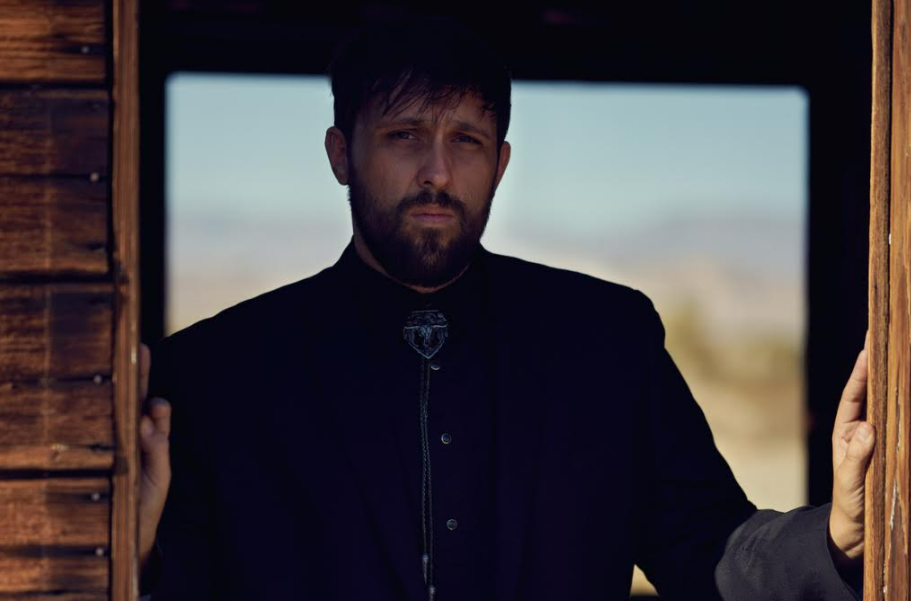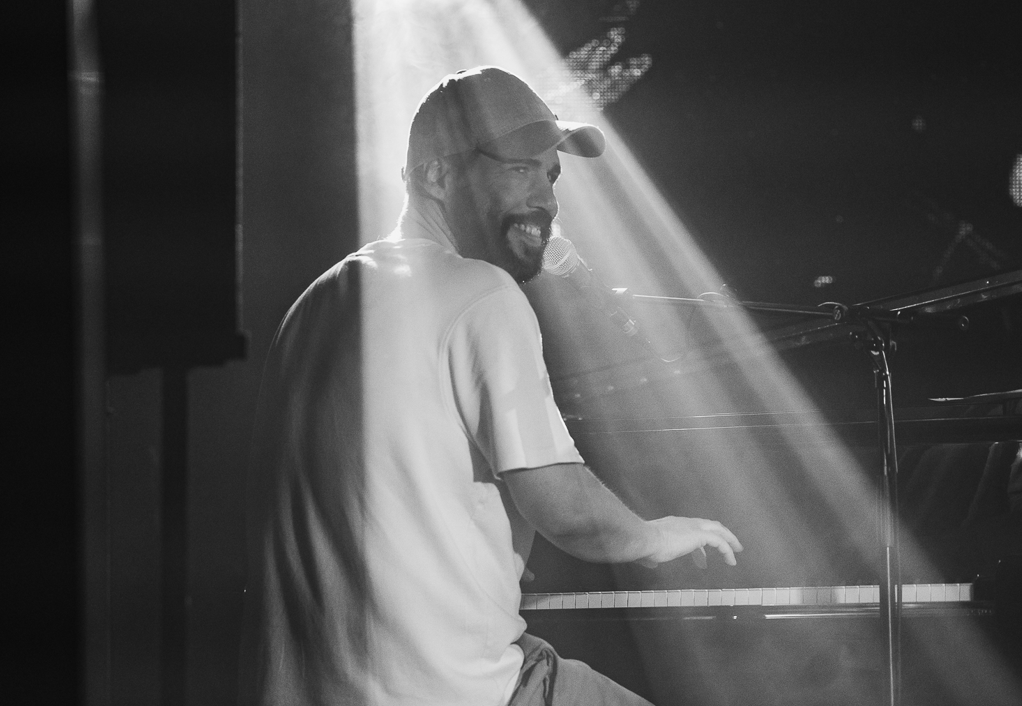

Texas singer-songwriter and worship pastor Brandon Hixson finds a particularly useful Christmas memory at the bottom of a muddy ditch. A childhood ice-cream outing with his mother supplied the incident; years of family retelling supplied its value. On Home For Christmas, a ten-song collection featuring eight originals, that modest disaster offers a persuasive starting point. Hixson’s holiday imagination thrives on the things a family remembers precisely because the day went sideways.
Consider the objects that populate these stories: a worn Christmas tree passed from Hixson and his wife to his twin sister, an illuminated Frosty decoration his mother bought in 1971. Their interest lies in their ownership histories. The tree has circulated through a marriage and a sibling relationship; the snowman belongs to the childhood Hixson shared with his sister. Hixson writes about decorations with a family history attached. Each object has acquired meaning through somebody keeping it, handing it over or remembering who brought it home.
I am particularly taken with the premise of That Old Christmas Tree. Passing an ageing decoration between relatives contains a small domestic comedy before the song even begins. Families redistribute possessions, inherit each other’s questionable taste and eventually become attached to the evidence. Paired with Christmas In The Ditch, it establishes humour as an important part of Hixson’s affection. His mother can be central to a treasured memory that also involves a stranded car. Love accommodates the ridiculous.

In Christmas ’87, Hixson revisits a childhood holiday, although the idea of a simpler Christmas deserves some scrutiny. Childhood has a considerable editorial advantage: adults handle the expense and logistics while children remember the toys and television specials. Hixson’s affectionate perspective privileges what the child received. The warmth is understandable; the version of the past it preserves is selective. The muddy excursion interests me more because its inconvenience survives inside the happy recollection.
His choice of Even A Miracle Needs A Hand, from the 1974 Rankin/Bass special ’Twas the Night Before Christmas, extends that personal history into shared popular culture. A television song can carry an entire household’s seasonal routine. Alongside The Miracle Of Christmas, it also illustrates the breadth of Hixson’s Christmas vocabulary: Christian belief and childhood entertainment occupy the same collection. For a worship pastor, the religious material has an established place in his working life; the animated special belongs to an earlier education.
The inclusion of Christmas In Heaven complicates the pleasure of revisiting those years. Remembering a family gathering also means reckoning with who can attend the next one. Through that lens, the old decorations acquire a further purpose: they preserve connections across changing households and generations.
For me, Home For Christmas is most compelling at this domestic scale. Hixson has chosen material with enough peculiar detail to invite curiosity about his family, especially when affection arrives through an awkward outing or a slightly embarrassing possession. The strongest emblem of that approach is his mother’s Frosty: a decoration bought in 1971, still important enough to receive its own song.